Vineyard and Winery / Sustainability Report

By Michael Brown, Direct Sales Manager

Introduction

Now in its sixth year our sustainability report continues to be a tool for staff, guests and industry partners to view our accomplishments and challenges for the year past. While each report is a synopsis of one year, viewing the reports collectively will show that many of our challenges are repetitive. As sustainability becomes more a commonplace term we are finding that the definition is becoming more ambiguous. We continue to look towards the Natural Step Network in guiding us toward our goals and have included their definitions and recommended actions in this report. To view our sustainability reports from prior years please see our website: sokolblosser. com. Here is a short list of our successes prior to 2008:

  • Organic certification for our vineyard in 2005
  • U.S. Green Building Council LEED certified barrel cellar (first winery in the world to achieve this) in 2002
  • Renewable wind power purchased from PGE – 1/3 of our power usage
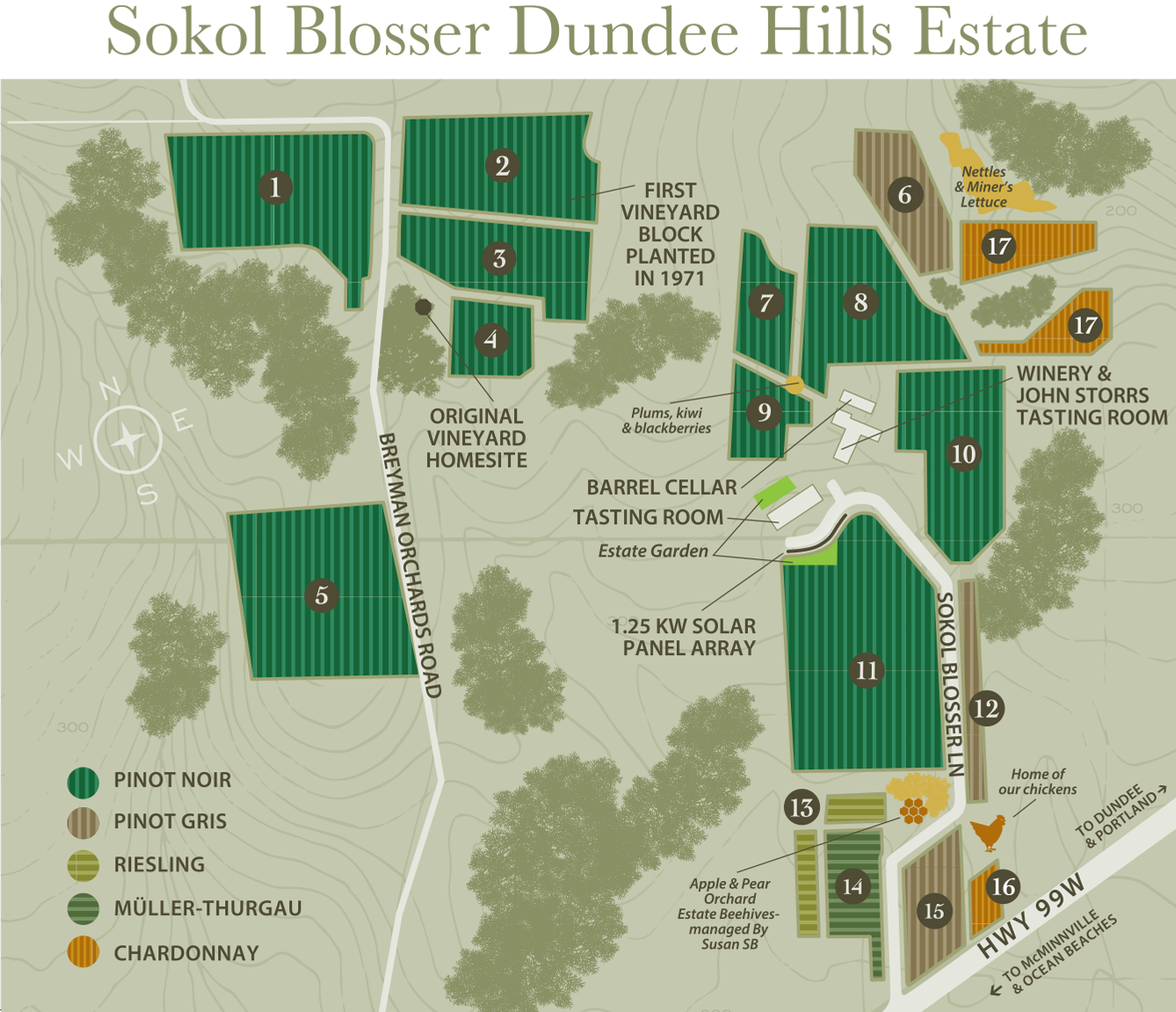
  • 25kW solar panel system – 1/3 of our power usage
  • Winery waste from harvest (grape skins and stems) recycled into compost piles, which is then used to improve
  • vineyard soil
  • 50% biodiesel in vineyard tractors and trucks
  • Member of the Prescott Western Bluebird Recovery Project with about 15 birdhouses
  • Brochures and copy paper now 100% post consumer waste recycled content
  • Eliminated foil capsules, printed wine labels on recycled paper, and put finished wine into kraft cases
  • Active in the Oregon Natural Step Network (Susan Sokol Blosser is on the board)

Sustainability at Sokol Blosser in 2008

An unprecedented amount of attention was given to the term "sustainability" in 2008. We saw mainstream companies begin to market their green efforts and there were more footprints left by our carbon than our shoes. But while we believe that all this attention for the environment is a good thing, it also presents new challenges to us as well. How do we maintain the impact and validity of words like "sustainability" when hundreds if not thousands of companies are carving out their own definitions of it? Some do this out of an earnest desire to better explain and execute what is a complex ideal but others redefine the terms to better suit their needs. We continue to use The Natural Step to help direct and measure our setbacks and accomplishments. We feel that our setbacks are just as important as our achievements because they remind us that sustainable business is not a project that is completed but rather a perspective that must be maintained.

The Natural Step uses a set of system conditions which are fundamental in creating and maintaining a sustainable society. Following are those system conditions and the actions associated with each of them:

Substances from the earth's crust must not systematically accumulate in nature.

Substitute minerals that are scarce in nature with others that are more abundant, use all mined materials efficiently, and reduce our dependence on fossil fuels

Substances produced by humans must not systematically accumulate in nature.

Substitute persistent and unnatural compounds with ones that are normally abundant or break down more easily in nature, and use all substances produced by society efficiently

The physical basis for the productivity and diversity of nature must not be diminished.

Draw resources only from well-managed ecosystems, pursue the most productive and efficient use of both those resources and the land, and exercise caution in all kinds of modification of nature (i.e. over harvesting and introductions)

People are not subject to conditions that systematically undermine their capacity to meet their needs.

Create and support action and policies that allow people to meet their fundamental human needs in our society and worldwide, so that the needs of all people on whom we have had an impact, and the future needs of our children can be met

We continually refer back to these four conditions when making new decisions or analyzing old ones. In this report you will find some of the same issues in multiple categories because, paradoxically, when viewed through the lens of The Natural Step our accomplishments can also be our frustrations.

Continuing Issues

WASTE: We are always striving to mitigate our waste and it seems that this year there was some give and take to our efforts. We successfully launched a composting program but lost our soft plastic recycling. Our goal of zero waste keeps us motivated and we continue to reuse and recycle as much as we can including our office paper, glass, metal, hard plastic, food waste, vineyard waste, corks and wood.

ENERGY: We have a long term goal to generate all of our energy needs onsite. This year we had a planning meeting that included the future installation of more solar panels. Our current system is supplying about 30% of our energy needs and we have estimated that with our expansion plan we can boost that to approximately 75%.

CORK: Many wineries have stopped using cork, the traditional wine bottle closure, and gone to either plastic corks or screw caps. Plastic has no appeal for us because it is not recyclable at the consumer level and we don't like plastic anyway as a petroleum-based product. Research on screw caps indicates that they do a good job of keeping the wine sound. But screw caps are metal (a mined, non-renewable material) and have a plastic liner. Even with the likelihood that cork taint will ruin 5-10% of our wine bottles, we still are using natural cork. This year, some cork companies came out with FSC-certified cork. We've used FSC-certified lumber for construction projects and were eager to get the FSC-certified cork as a way to lessen our impact on the Earth. However, we could not justify the 40% upcharge. More manufacturers are getting FSC-certified, so our hope is that the upcharge will be less next year.

CARBON NEUTRAL: This year we began exploring the world of carbon neutrality and discovered that it is 2008 Sustainability Report | Sokol Blosser Winery | Dundee, Oregon | sokolblosser.com | 1-800-582-6668 no easy task. Still in the beginning stages of defining becoming carbon neutral it will take some time while we learn exactly what it means for Sokol Blosser. We have joined the Governors Carbon Neutral Challenge and The Climate Registry. These two organizations will help us to better understand the initiatives and give us a chance to shape their direction. We will begin reporting our green house gas emissions to The Climate Registry for the calendar year 2009.

Frustrations and Setbacks

SOFT PLASTIC RECYCLING: Due to the lack of demand by overseas markets our local source for soft plastic recycling has stopped taking shipments. This is a particular frustration to us since only a short time ago this was one of our major successes. We use soft plastic shrink wrap for shipping and receiving pallets of wine along with other soft plastics that get used in the tasting room such as food service materials. We plan to stockpile the soft plastic that we accumulate in hopes that the market will pick back up and we can once again recycle rather than discard our plastics.

SOLAR PANELS: Towards the end of the year we discovered that one of our solar panels was not producing at optimal levels. This was a frustration because it went undetected for a number of months. We have since had it repaired and have begun to more closely monitor the energy output.

CARBON OFFSETS: As we learned more about carbon reporting we began to look for programs we can invest in to offset our carbon footprint. With many to choose from it has become difficult to decide what is legitimate and what is suspect. We hope to initiate local projects that wineries can invest in and that will give us an opportunity to give back to the community as well as help the environment.

Successes

THE CLIMATE REGISTRY: We feel that this organization will give weight to our future claims of carbon neutrality by requiring certification of all data that we report. We will begin reporting our 2009 green house gas emission to the registry which requires that the information be verified by an independent third party. We feel it necessary that claims that have a marketing benefit be backed up by a certifying organization. Much like our organic certification we feel strongly that the terms by which these programs are defined lose their impact if strict standards are not followed.

FIRST CARBON AUDIT: In association with ECOS Consulting and the Governors Carbon Neutral Pledge we completed an audit of our green house gas emissions in a format that was specific to the wine industry. We learned a lot about how our industry in particular produces green house gases and became much more knowledgeable about how to measure and mitigate those gases.

STAFF GARDEN: We had more staff members participate in our garden this year than ever before. We divided up the rows and raised organic vegetables that were shared amongst the staff.

COMPOST PROGRAM: After much research into different ways to dispose of food waste that is generated by the tasting room and our staff lunches we settled on a series of compost trenches. Everyday our tasting room staff empties the contents of our compost bin into the trench and covers it over with dirt. By the time we get to the end of the trench row, the spot where we started has decomposed via Mother Nature's hard work (worms, water and heat). This has proved to be a much better system than the worm and compost bins that we researched.

ORGANIC LABELING: With the release of our 2006 vintage Pinot Noir's we saw "Made With Organic Grapes" for the first time on our labels. 2005 was the first year that we produced certified organic fruit but it was this year's release that identifies it on the label.

NEW HEAT PUMP: We installed a TRANE XL15i Super Efficiency heat pump in our tasting room. The new unit has a SEER rating of up to 16 and a variable speed air handler that will greatly decrease our energy usage and keep the tasting room much cooler for our wines in the summer months.

BLUE BIRD RECOVERY: We banded a record number of 50 bluebird chicks this year and had the highest amount of hatchlings in the state of Oregon. We work hard to promote the bluebird population in the vineyard because they help to naturally control the pest population.

ECO FRIENDLY PRINTING: Susan Sokol Blosser's new book Gracious and Ruthless was printed on Endeavor paper that is FSC certified, utilized 50% recycled and 25% post consumer waste and also soy based inks. LESS COMUTING: We helped to start a carpooling program that inspired our staff as well as staff at other wineries to ride together. We have staff members who periodically work from home and also two managers who moved within 10 miles of the winery, cutting their combined commutes by over 150 miles per day.

GREEN BAG LUNCHES: Our staff lunches continue to give employees an opportunity to put their ideas into action. We dedicated a printer to reusable paper, identified better recycling practices and continued our staff education through these lunch meetings.

OUTDOOR LIGHTING: We installed high efficiency outdoor lighting for the safety of our staff in the winter months.

TANK INSULATION: We insulated 4 of our ten-thousand gallon stainless steel tanks to help control temperature during bottling in late winter.

SHIPMENT SCHEDULE: Changing our club shipment schedule to bi-annual shipments rather than quarterly allows us to send more wine at a lower cost and much more efficiently. We greatly reduced our shipping rates and number of vehicle trips required to move the wine.

SHIPPING/PAPER MATERIALS: We continue to source products from vendors who share our commitment towards the environment. West Coast Paper has been a great partner in helping us with our packaging and paper supply and following is a list of those products:

  • 100% recycled material toilet seat covers
  • Biodegradable, green certified foam hand cleanser
  • 65% post consumer and 100% recycled content toilet paper
  • 100% recycled M-fold towels
  • Compostable cornstarch based forks, knives and spoons
  • Clorox Green Works glass cleaner
  • Clorox Green Works all purpose cleaner
  • Compostable cornstarch packing peanuts
  • Recycled plastic pallets
  • Custom logo boxes and bags are made locally

TRANSPORTATION: Eco Shuttle became our first transportation partner in 2008. We recommend their bio diesel shuttles exclusively and use them to transport our clients whenever possible.

Issues for 2009

CONTINUING EDUCATION: Staff education is a top priority. We will continue to send our employees to the Natural Step training and other sustainability seminars throughout the year. We have had all of our managers attend the training and are now beginning to send our hourly employees.

SUSTAINABLE GRAPE SOURCES: How do we source more sustainably-farmed fruit? Our blended wines, Evolution and Meditrina, include fruit that comes from Washington and California where they don't have LIVE, Oregon's sustainable certification for vineyards. Washington has VINEA, which is similar to LIVE. California doesn't have anything. How can we work with our growers and suppliers to help them achieve a sustainable farming certification? This will be something we start to tackle in 2009 and will likely take us many years to achieve.

CARBON NEUTRAL: We are working to get closer to carbon neutrality by finding local carbon offsets and certification for our reporting. WASTE: How can we minimize the amount of materials we throw away? And how can we encourage our customers to do the same?

SUPPLIERS: We continue to look for like-minded companies with which to do business.

TRANSPORTATION: Moving wine and people has been identified as the largest contributor of green house gases in our industry. We will continue to look for innovative ways to get our guests to the winery and our wines to the public in order to reduce our carbon footprint.