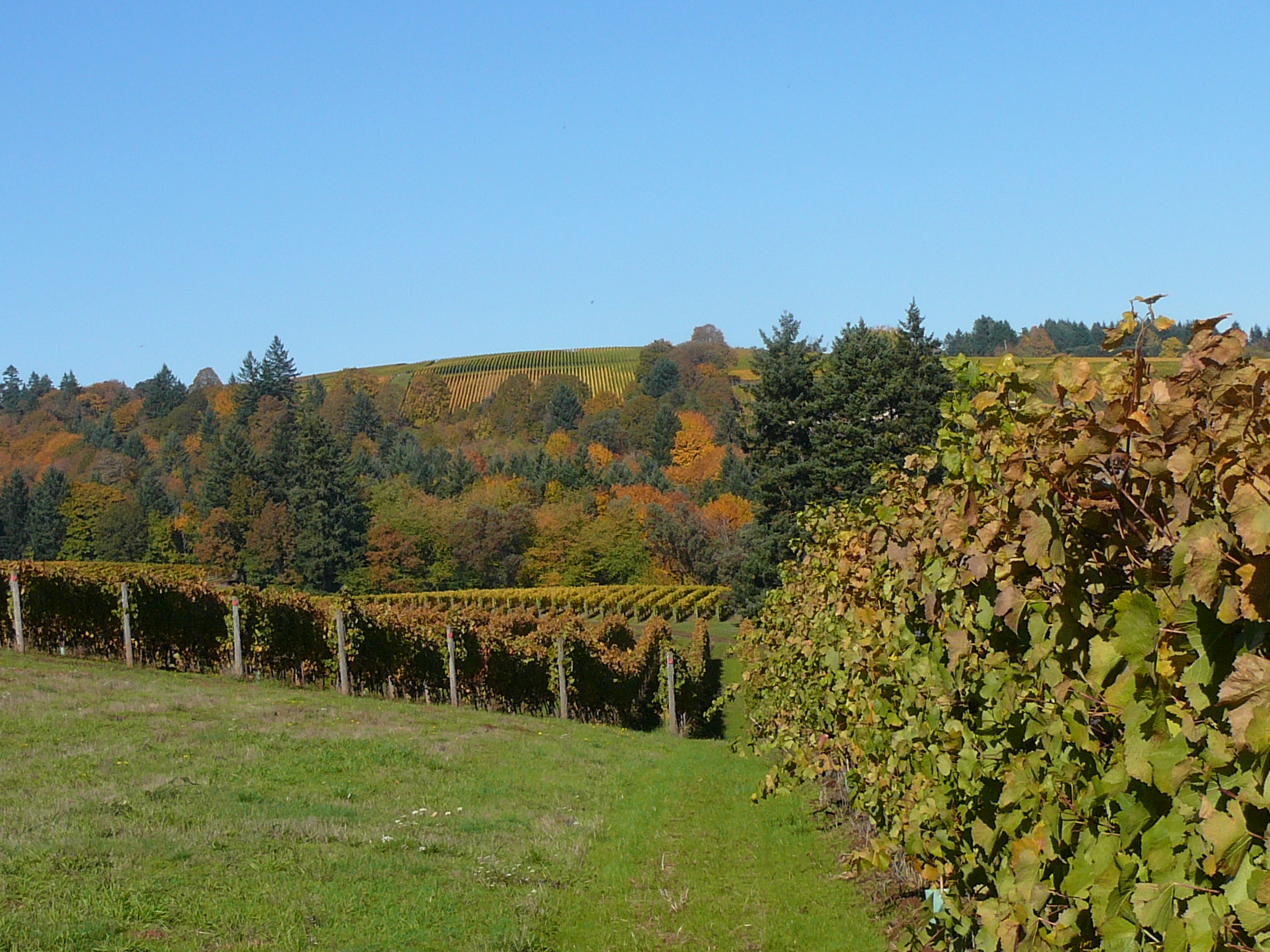
Vineyards Rooted in Purpose
For over 50 years, the Sokol Blosser vineyard has been a living expression of Oregon’s Willamette Valley—nurtured with care, crafted with intention.
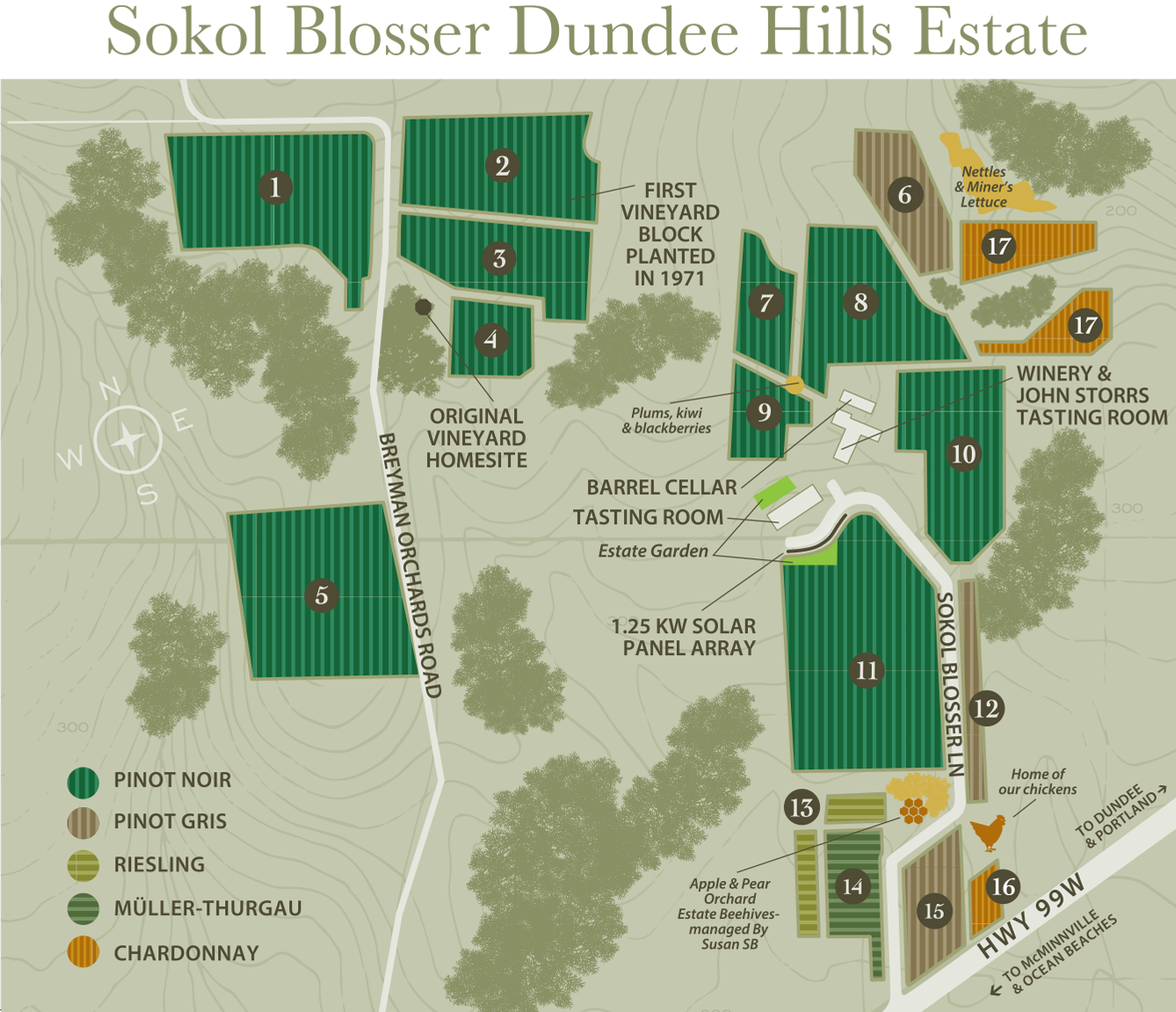
Our Vineyard Maps
As our wine program has grown and evolved, so too has our acreage. Today, we farm 128 acres across Oregon, including our Dundee Hills estate, Blossom Ridge in the Eola-Amity Hills, and Kalita Vineyard in the Yamhill-Carlton AVA.
Guided by our “Good to the Earth” philosophy, we are committed to caring for the land today while paving the way for future generations to continue our tradition of winegrowing excellence.
Guided by our “Good to the Earth” philosophy, we are committed to caring for the land today while paving the way for future generations to continue our tradition of winegrowing excellence.
View our full vineyard map here
Dundee Hills Estate Vineyard
Our passion for making world-class wines begins in our vineyards. Originally planted in 1971, our certified organic 89-acre Dundee Hills Estate in Oregon has inspired our family for three generations.
Located 28 miles southwest of Portland, the Dundee Hills AVA was shaped over 15 million years ago, when lava flows from northeast Oregon spread into the Willamette Valley. This geological event formed the region’s signature red volcanic Jory soils, for which the Dundee Hills is renowned.
On our estate, we grow Pinot Noir, Pinot Gris, Riesling, Müller-Thurgau, and Chardonnay—each reflecting the character of this distinctive site.
Located 28 miles southwest of Portland, the Dundee Hills AVA was shaped over 15 million years ago, when lava flows from northeast Oregon spread into the Willamette Valley. This geological event formed the region’s signature red volcanic Jory soils, for which the Dundee Hills is renowned.
On our estate, we grow Pinot Noir, Pinot Gris, Riesling, Müller-Thurgau, and Chardonnay—each reflecting the character of this distinctive site.
Kalita Estate Vineyard
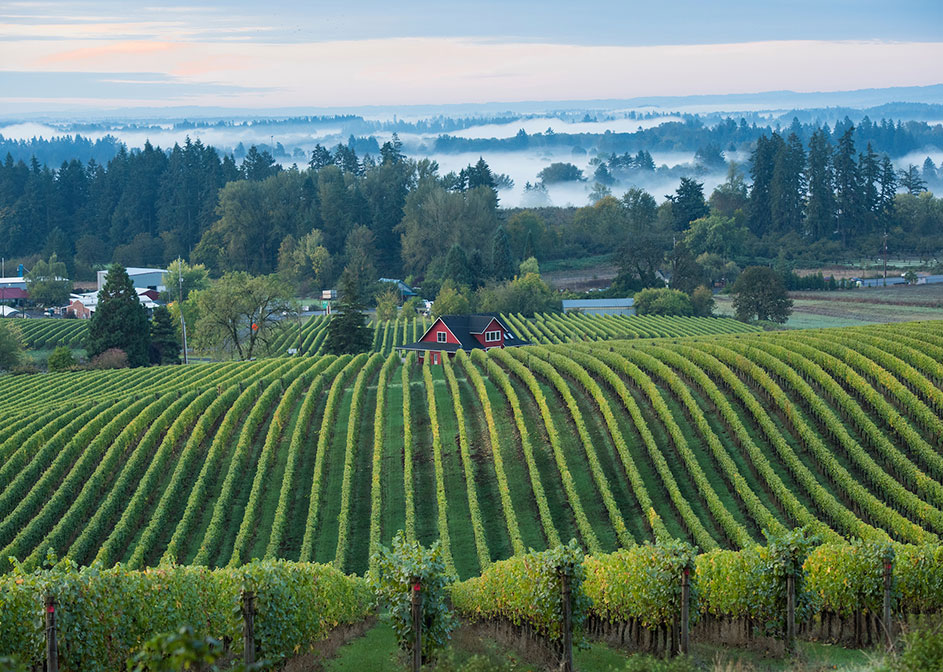
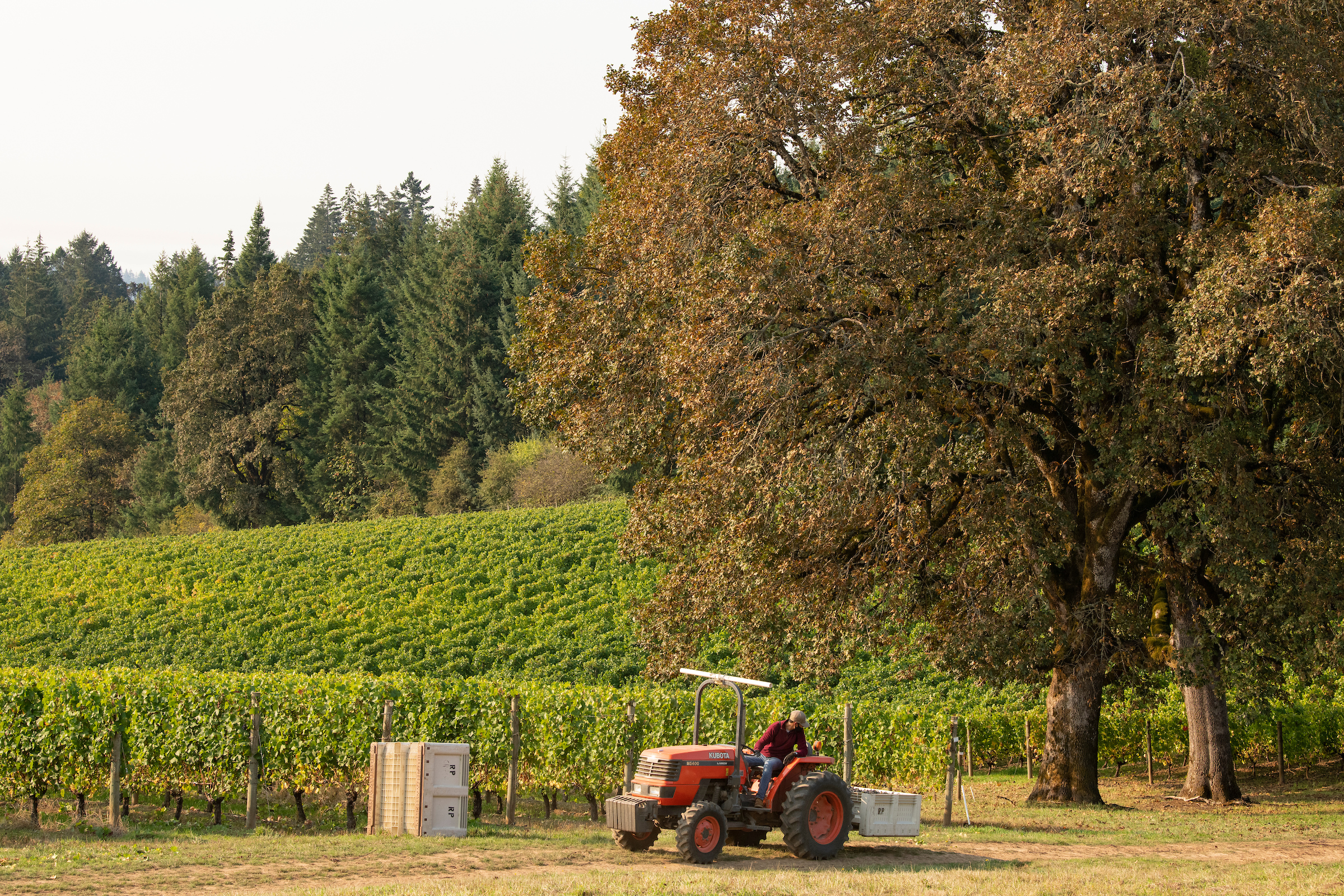
Kalita Estate Vineyard is located in the heart of the Yamhill-Carlton AVA in Oregon’s Willamette Valley. Acquired in 2021, we are proud to carry forward its two-decade legacy of producing exceptional, world-class Pinot Noir.
Today, we farm 22 certified organic acres of Pinot Noir, along with a small amount of Pinot Meunier—each expressing the character and distinction of this remarkable site.
Today, we farm 22 certified organic acres of Pinot Noir, along with a small amount of Pinot Meunier—each expressing the character and distinction of this remarkable site.
Blossom Ridge
Blossom Ridge Vineyard is a 20-year-old, certified organic site located in the Eola-Amity Hills AVA. We farm 16 acres of Pinot Noir and Chardonnay, a vineyard we have stewarded since 2013.